The school told you two things. The building is wheelchair accessible, and your child is passing, so there's no reason to start an Individualized Education Program (IEP), the written plan of specialized instruction and services a child gets at school. Here's the part that didn't come up: those are two different rules, and passing grades don't decide whether your child qualifies.
You have the right to ask for an evaluation, in writing, at any time. Let's walk through why the school's answer doesn't close the door.
A ramp is not an IEP
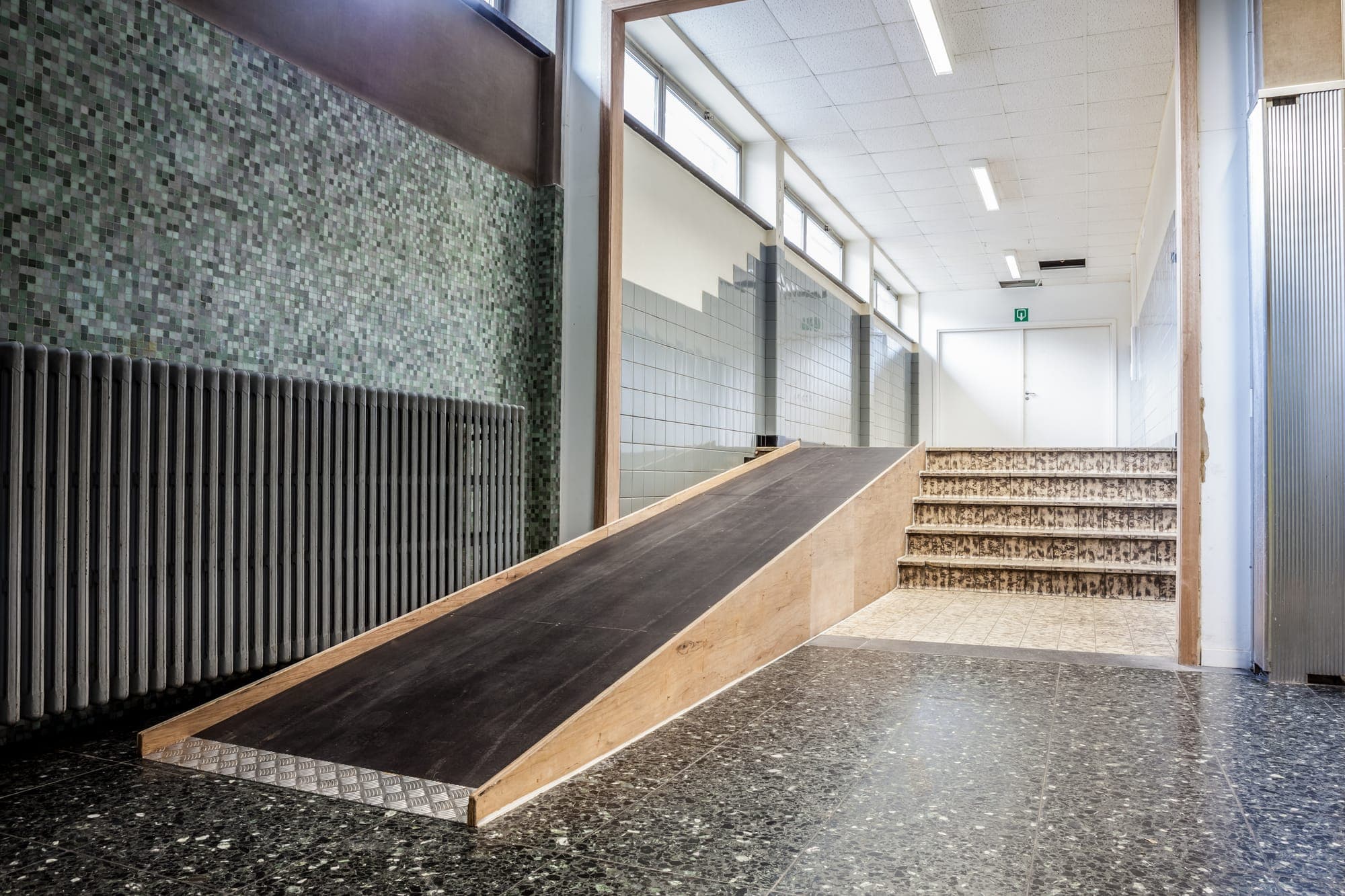
A wheelchair-accessible building answers one question: can your child physically get into the school and move around it. An IEP answers a completely different one: does your child need specialized instruction to learn. A school can be fully accessible and still owe your child an IEP.
Under the Individuals with Disabilities Education Act (IDEA), the federal special education law, a child qualifies when a disability affects their educational performance and they need special education and related services (34 CFR 300.8). Notice what's missing from that standard: nothing about report cards. A child can earn passing grades and still meet it, because grades don't measure how hard your child is working to get them, or what they'd achieve with the right support.
Say your daughter reads two grade levels behind but scrapes by on B's because she stays up late and you re-teach every lesson at the kitchen table. Passing, yes. Getting what she needs to learn, no. That gap is exactly what an evaluation looks for.
Two rights the "we're accessible" answer skips
Once a child qualifies, IDEA covers more than the accessible building already provides.
Any assistive technology or equipment your child needs at school must be provided at no cost to you. That's a speech device, a special keyboard, text-to-speech software, whatever the team decides your child requires (34 CFR 300.105). You don't buy it. The school does.
Your child also has the right to learn alongside their classmates to the greatest extent that works for them, with the supports built in. The law calls this the least restrictive environment (34 CFR 300.114). Support isn't supposed to mean pulling your child out of the room. It's supposed to mean bringing help into it.
You can ask for an evaluation in writing
You can request a free written evaluation at any time. You don't need the school to suggest it first, and you don't need to wait for grades to slip.
The school also can't use a reading program or a Response to Intervention (RTI) plan, a system of extra help delivered before special education, to put off that evaluation. The U.S. Department of Education's Office of Special Education Programs made that clear in OSEP Memo 11-07. "Let's try RTI first" is not a reason to delay. Under federal law, the evaluation is generally completed within 60 days of the day you give consent, unless your state sets its own timeline.
Here's how to put the request in writing today:
- Address a short letter or email to the school principal and the district's director of special education.
- Name your child, their grade, and their teacher.
- Write one clear sentence: you're requesting an initial evaluation for special education under IDEA.
- Give two or three specific examples of what worries you about your child's learning.
- Date it, keep a copy, and ask the school to confirm they received it.
The Center for Parent Information and Resources has a model evaluation request letter you can copy almost word for word.
Frequently asked questions
My child is passing. Can the school really still refuse to evaluate?
The school can decline a request, but it has to tell you why in writing. That written notice matters, because passing grades alone aren't a legal reason to say no. Eligibility turns on whether a disability affects your child's learning and whether they need specialized instruction, not on the grade book. If you get a refusal, read the reason closely and put your concerns, and your examples, back in writing.
Does an accessible building mean my child doesn't need a 504 plan or an IEP?
No. A wheelchair-accessible building meets a physical access rule. An IEP provides specialized instruction and services, which is a separate right under IDEA. One doesn't replace the other. If your child needs instruction changed to learn, physical access alone doesn't cover that.
What if the school wants to try an intervention program first?
You can agree to extra help and still request a formal evaluation at the same time. The two aren't either-or. An RTI or intervention plan can't be used to delay the evaluation once you've asked for it in writing, per OSEP Memo 11-07. Send your written request, and let the intervention run alongside it.
Your next step
You didn't do anything wrong by asking, and your next step is still in front of you. Send the written evaluation request this week, keep a copy, and mark your calendar for the school's response.
If sitting across from a full IEP team feels like a lot to carry alone, you don't have to. A Turnout education advocate can help you prepare for the evaluation request and sit beside you at the meeting to push for what the law already requires. See what an education advocate does at an IEP meeting, or talk with our team about your child's situation.